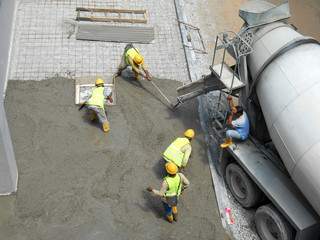
Proper curing of concrete is essential for its strength, durability and longevity. The concrete must be cured properly after it has been placed to ensure that it reaches maximum strength.
Concrete Contractor Denver CO use a variety of methods to control temperature and humidity for effective curing. Some methods include spraying, wet covering and using a curing compound.
Temperature
Concrete curing consists of keeping the concrete moist and at the correct temperature after it has been poured to ensure proper strength gains. This process helps the concrete achieve optimal strength, durability, and water tightness, and it prevents drying shrinkage that can result in surface cracking.
The initial curing period is crucial to the concrete’s long-term performance, and a number of factors influence the duration of this stage. Specifically, the temperature of the concrete impacts how fast the hydration reactions take place. Higher temperatures increase the reaction speed, but it is critical to avoid going too high or else the concrete could develop other undesirable characteristics.
In addition, the ambient temperature has a significant impact on how quickly the concrete will dry. Hot weather accelerates the curing process and leads to excessive moisture loss, while cold temperatures slow down the process and can even halt it altogether. This is why it’s important to have a good understanding of the ideal concrete curing temperature range and the best ways to control it.
To maintain the appropriate concrete curing temperature, it is essential to shield the concrete from direct sunlight and wind. These elements can cause rapid evaporation of moisture, which will weaken the concrete and reduce its durability. A variety of curing methods are available to help minimize moisture loss, including ponding, misting, covering with wet blankets or plastic sheeting, and using curing compounds that form a waterproof barrier over the concrete’s surface.
Another consideration when it comes to maximizing concrete curing is the air’s dew point temperature. This is the temperature at which water molecules begin to condense, and it determines how easily water vapor in the atmosphere can escape into the concrete mixture. During curing, the dew point temperature should be as close to the concrete’s temperature as possible to minimize water vapor evaporation.
The interplay between key Concrete Curing Essentials like temperature and humidity is critical to the success of any project. By carefully examining and managing these conditions, professional contractors ensure proper concrete curing that promotes the integrity of the finished product.
Humidity
Concrete curing is an essential process for ensuring the strength of newly poured concrete. A chemical reaction between cement and water creates concrete, and a balanced ratio of moisture is necessary for concrete to develop its full strength potential. Many factors influence the quality of concrete, including temperature, humidity, and curing techniques. Professional contractors use a blend of science and craft to optimize the concrete curing process, ensuring that the final product meets project specifications.
Moisture is critical for the curing process because it helps concrete set and harden. But if too much water is used to mix the concrete, or if the concrete dries too quickly, it can lose its strength. To prevent this, construction professionals must protect the concrete from direct sunlight and wind, which speed up evaporation. They can also use coverings, such as plastic sheeting or curing compounds that form a membrane over the concrete surface.
Some curing compounds are designed to be sprayed over the concrete and then dry, creating a protective barrier that reduces the amount of moisture lost through evaporation. These curing products, known as “cure & seals,” are often used on projects that require the concrete to be resistant to water, chemicals, and abrasions. They are available in a variety of forms, including sprayed liquid and foam, to ensure that they cover all exposed areas of the concrete.
In addition to these coatings, there are curing products that contain absorbent materials or that work with the concrete to help retain its moisture. Some of these products work by reducing the water-to-cement ratio, while others use self-desiccant agents or control ambient conditions to speed up the drying process. However, these methods can backfire if they aren’t used properly, as they can interfere with the chemical reactions that take place within concrete and lead to improper curing.
To avoid this, it’s important to spray down the concrete several times a day, especially during its first seven days. It’s also necessary to keep the concrete protected from direct sunlight, wind and other environmental conditions that can affect its hydration levels.
Moisture Content
Concrete curing is an essential process that ensures the concrete achieves its intended strength and durability. It requires specific environmental conditions to be met, including temperature, humidity, and moisture content. The ratio of water to cement that is used in the concrete mix plays an important role in curing time, as well. A higher ratio results in more durable, more permeable concrete, while a lower one creates a weaker, less droopy structure. Regularly checking the moisture content of concrete with a humidity sensor can help project managers stay on top of curing progress and take proactive steps when necessary to keep it within optimal ranges.
The curing process needs to be supervised and monitored to prevent over-hydration, which leads to the formation of surface cracks. It’s also important to examine the concrete for any signs of spalling or delamination, as these can indicate a need for additional curing measures. Taking these and other measures into consideration can help contractors optimize the curing process and ensure that the concrete develops its desired strength and durability.
Some people use the terms concrete curing and drying interchangeably, but they are different processes with very distinct outcomes. Curing concrete involves keeping the material at a specific humidity level until it reaches its full strength and resistance, while drying aims to reduce the moisture content as quickly as possible.
Several different techniques can be used to maintain an adequate supply of moisture for the concrete during curing, including ponding and immersion, spraying, and the application of curing compounds. The choice of method often depends on project requirements, the climate, and practicality.
For example, ponding and immersion involve submerging the concrete in a pond of water to provide a consistent supply of moisture without the risk of evaporation. Sprinkling involves periodically spraying the concrete with water to keep it wet. In addition, covering the concrete with a plastic sheet can help to reduce evaporation and provide insulation from harsh sunlight.
Another option is to apply a membrane-forming curing compound like E-Cure to the concrete to form a thin film that reduces moisture loss and protects the concrete from damage during construction. This is especially effective in areas where high-traffic or long-term exposure are anticipated, as it provides extra abrasion resistance and helps the concrete resist discoloration over time.
Time
Concrete curing is a meticulous process that depends on careful consideration of several factors. The proper temperature, humidity and moisture content are key to the strength of the final product. Without these conditions, the concrete won’t be able to hydrate properly or gain the necessary strength. Construction contractors can help to ensure that the concrete is cured correctly by carefully monitoring and managing environmental conditions.
It’s also important to protect the concrete from extreme heat or cold, which can accelerate moisture evaporation and impact curing quality. This can be accomplished by shielding the concrete from direct sunlight, wind and other elements that might affect hydration. In addition, construction professionals can use insulating blankets and heating systems to maintain the desired temperature.
The first 7 days are especially critical, as the concrete is developing its initial strength. It’s not recommended to apply paint or stain on new concrete until at least this time has passed. If applied too soon, these materials may trap excess moisture in the concrete, leading to peeling, flaking and blistering.
To keep the concrete hydrated, it’s necessary to regularly mist or spray water on the surface. This can be done with a hose or nozzle, or using a special curing compound that creates a membrane. These products can be sprayed onto the concrete or covered with plastic sheeting to slow down evaporation and promote consistent moisture levels.
Other curing methods include wet covering with plastic sheeting, steam curing and immersion. Wet coverings like burlap, canvas and straw can be used to create a barrier and trap moisture. This is often preferred to spraying, which can be difficult to manage consistently on a large project.
Steam curing can be useful for projects that require accelerated hydration or high early strength. By immersing the concrete in a pond or tank of water, this method can speed up the chemical reaction and ensure that the concrete is sufficiently hydrated for maximum strength.
There are many different curing products available, and choosing the right one for each project can be challenging. However, some products are more versatile than others, making them suitable for a wider range of applications. For example, sodium silicate-based products like Cure Hard and E-Cure are excellent choices for curing, sealing and hardening, and can be applied to a wide variety of surfaces.